NEW! Compare your current
IT quote
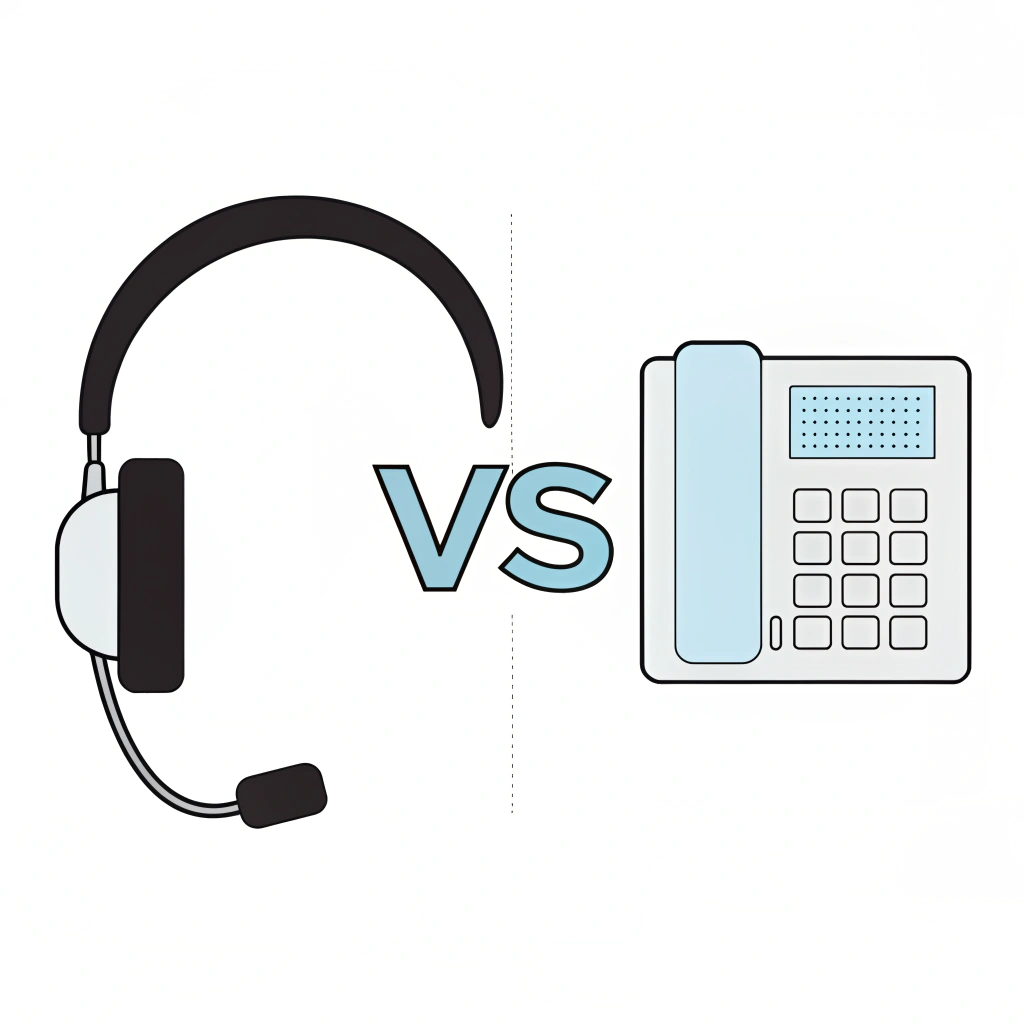
VoIP vs Landline: Why Modern Businesses Are Switching
Table of Contents
The debate of VoIP vs landline isn’t just about new vs old tech – it’s about how modern businesses communicate, save money, and stay future-ready. If you’re still using traditional landlines or just starting to explore VoIP (Voice over IP), it’s time to understand the real differences and why more UK businesses are making the switch today.
What is VoIP In Simple Terms?
VoIP stands for Voice over Internet Protocol. Instead of using copper phone lines, VoIP lets you make calls through your internet connection.
In plain English: it’s a phone system that works over Wi-Fi or broadband.
You can use it on:
- Your desk phone
- Your laptop
- Your mobile
And because it’s software-based, you get all your calls, voicemails, and call controls in one app. Think of it as your phone system, but smarter.
What Are Landlines?
Landlines use a fixed phone line made from physical wires (PSTN or ISDN) to transmit voice signals. This is the traditional phone system we’ve used for decades.
Key facts:
- You need a dedicated handset
- Calls go through underground cables
- It usually ties you to one location
- Limited features beyond basic calling
The UK’s PSTN network is due to be switched off by 2025, making landlines obsolete unless upgraded.
VoIP VS Landline: Why You Should Consider VoIP
1. Huge Cost Savings – VoIP systems are significantly cheaper than landlines. You only pay for what you use, there are no surprise call charges, and no need for expensive on-site hardware.
2. Easily Scalable – Got a new employee? Add a new line in minutes. Need to downsize? No problem. VoIP systems grow (or shrink) with your business.
3. Remote Work Ready – With VoIP, you can work from anywhere with an internet connection. Perfect for hybrid and remote teams. Landlines can’t keep up.
4. Better Call Features – Voicemail to email, call forwarding, video calls, call analytics – VoIP gives you tools to boost productivity and customer service.
5. Keep Your Existing Number – Switching to VoIP doesn’t mean losing your number. Port your landline number to your VoIP system.
6. Integration with Other Tools – VoIP integrates with Microsoft 365, CRMs, calendars, and more. Landlines just don’t do this.
7. No More Maintenance Hassles – VoIP is managed remotely. No more engineers crawling under desks to fix a line.
Comparison Table: VoIP vs Landline for Business
| Feature | VoIP | Landline |
|---|---|---|
| Cost | Low, pay-as-you-grow | Higher fixed monthly costs |
| Scalability | Instantly scalable | Limited by hardware |
| Mobility | Work from anywhere | Location-based |
| Features | Rich feature set | Basic calling only |
| Integration | With CRM/365/etc. | Minimal |
| PSTN Dependency | No | yes |
| Maintenance | Centralised + remote | On-site and manual |
*AI Assistant is a feature from some of our VoIP partners
The Benefits of VoIP for Businesses
Save Money – VoIP systems are far more cost-effective than traditional landlines. You avoid line rental, expensive PBX hardware, and high call rates—especially for long-distance or international calls. Most VoIP providers offer simple pricing, often on a per-user basis, which makes budgeting easier. Plus, internal calls between teams are usually free.
Work Anywhere – VoIP is built for flexibility. Your team can make and receive business calls from anywhere with an internet connection—whether at home, in the office, or abroad. This supports hybrid working models and ensures that staff stay connected wherever they are.
Get More Done – VoIP includes smart features like call forwarding, voicemail-to-email, auto attendants, and call recording. These help staff respond quicker and deliver better service. You can even integrate your VoIP system with calendars, CRMs, and productivity tools like Microsoft Teams for smoother workflows.
Stay Future-Proof – With BT’s PSTN and ISDN switch-off coming by 2025, landlines are becoming outdated. VoIP systems are digital-first and constantly improving. By adopting VoIP now, your business is investing in tech that will adapt to future changes and new ways of working.
Grow Without Stress – Scaling with VoIP is simple. Want to add a new user or a whole department? You can do it in minutes—no need for engineers or physical phone lines. This is ideal for growing businesses, temporary teams, or those expanding across multiple sites.
Keep Your Number – Changing systems doesn’t mean changing phone numbers. With VoIP, you can port your existing landline number, keeping continuity with customers and suppliers.
One System, All Devices – Your business calls follow you across devices. Whether it’s a laptop, mobile, or desktop handset, your VoIP number works everywhere. No more missing calls because you stepped away from your desk.
Lower Environmental Impact – VoIP reduces the need for physical infrastructure and maintenance, and supports remote work, which cuts travel and lowers your carbon footprint.
Improved Customer Experience – VoIP gives your business more control over how calls are handled. Features like ring groups, call queues, and intelligent routing make sure customers get through to the right person faster. Call analytics help you identify and fix service gaps too.
Are There Any Downsides to VoIP?
Internet Required: No internet, no VoIP. You need a reliable broadband connection.
Power Dependent: If the power goes out and you have no backup, your phone system is offline.
Voice Quality Can Vary: On a bad connection, call quality may suffer. But with good setup, it’s crystal clear.
Security Risks: Like any online service, security matters. VoIP should be protected with encryption and secure networks.
Do Landlines Still Have a Place in Business?
Some businesses keep one as a backup, especially in remote areas. But for most, the benefits of VoIP now outweigh the case for sticking with landlines.
The PSTN switch-off means every business in the UK will need to find an alternative before 2025. Better to be ahead of the curve than rushed into a decision.
How to Move from Landline to VoIP: Step-by-Step
1. Audit your current system: What lines do you have? What do you use them for?
2. Check your broadband: Is your connection strong enough for VoIP?
3. Choose a VoIP provider: Work with a provider like Qual Limited that understands UK businesses.
4. Port your numbers: Move your landline numbers to VoIP so you keep continuity.
5. Train your team: Make sure everyone knows how to use the new system.
6. Monitor & optimise: Use VoIP reports to refine your call setup.
FAQs About VoIP vs Landline
Is VoIP really cheaper than a landline?
Yes – especially when you factor in free internal calls, no line rental, and cheaper international calls.
Will I lose my phone number if I switch to VoIP?
Nope! You can port your number across.
What happens if the internet goes down?
You can route calls to mobile phones or use mobile data as a backup.
Is VoIP secure?
With the right provider, absolutely. Encryption and secure networks keep your data safe.
Do I need new phones?
Not always. Many VoIP systems work with existing handsets or softphones on your laptop or mobile.
Work with Qual Limited: Get Future-Ready Voice for Your Business
At Qual Limited, we help UK businesses make the move from landlines to VoIP smoothly and cost-effectively. Whether you’re a small team or managing multiple offices, we’ll design a VoIP solution tailored to how you work – with installation, training, and support baked in.
Speak with an account manager today and discover how our Business IT Services can support your organisation’s growth and resilience.
Continue Reading: IT Risk & Support Strategy
Understanding operational risk, IT resilience, and structured technology management is essential for organisations reviewing their IT strategy. These guides explore the most common risks businesses face when managing infrastructure and selecting the right IT support approach.
Reactive IT Management Risks
Learn how reactive IT environments introduce hidden operational risks that can lead to downtime, security exposure, and unstable systems.
Single Point of Failure in IT: The Hidden Risk That Breaks Businesses
Discover how single points of failure develop inside IT environments and how resilient infrastructure planning removes them.
Immutable Backup: The Last Line of Defence in Your IT Resilience Strategy
Understand why immutable backup is now considered one of the most important defences against ransomware and data loss.
Business Continuity vs Disaster Recovery: RTO, RPO and Real-World IT Planning
Explore how continuity planning and disaster recovery strategies work together to protect organisations from operational disruption.
Evaluating Your IT Support Model
If your organisation is reviewing its IT support structure or considering changing providers, these guides explain what businesses should evaluate before committing to a new support agreement.
Signs Businesses Have Outgrown IT Support
Identify the warning signs that your current IT support model may no longer support the growth or operational requirements of your business.
Managed IT Services vs Break-Fix Support
Compare proactive managed IT services with traditional reactive support models and understand which approach provides greater stability and long-term value.
How to Choose a Risk-Led IT Support Provider in the UK
A practical guide explaining what businesses should evaluate when selecting an IT support partner focused on risk reduction and operational stability.
Assess Your Current IT Risk Exposure
Before committing to new infrastructure or a new IT support provider, you can also:
Complete the IT Governance & Risk Snapshot to identify operational risk gaps.
Use the IT Quote Comparison Tool to validate supplier pricing and review IT proposals.
Qual Limited: Your Trusted IT Fulfilment Partner
At Qual Limited, we specialise in streamlining IT procurement and fulfilment for businesses of all sizes. Our approach includes:
- A dedicated Personal Account Manager to handle your IT needs
- End-to-end procurement support, from vendor selection to delivery
- Strategic cost-saving solutions tailored to your budget
- Access to an extensive network of global IT vendors
With 30 years of experience, we understand the challenges of IT procurement and provide customised solutions to eliminate inefficiencies, reduce costs, and improve IT fulfilment speed.
Book a Consultation & Optimise Your IT Procurement Today
IT procurement doesn’t have to be complex. Qual Limited simplifies the entire process, ensuring you get the right IT solutions at the right price, without the usual frustrations and delays.
Book a consultation today with your dedicated Personal Account Manager and discover how we can streamline IT procurement, enhance efficiency, and drive cost savings.
Book a consultation now with Carlton and take the stress out of IT procurement with Qual Limited
Tags
Category
Share This Blog
Search for blogs
Popular Searches
AI
Cyber Security
IT Procurement






Featured Blog