Source by Qual is
live
(Beta)

Managed IT Services vs In-House IT: Which Is Right for Your Business?
Managed IT services vs in-house IT is a decision that directly impacts operational resilience, cost predictability and growth scalability. Choosing the right model requires a structured evaluation of governance capability, risk oversight and long-term strategic alignment.
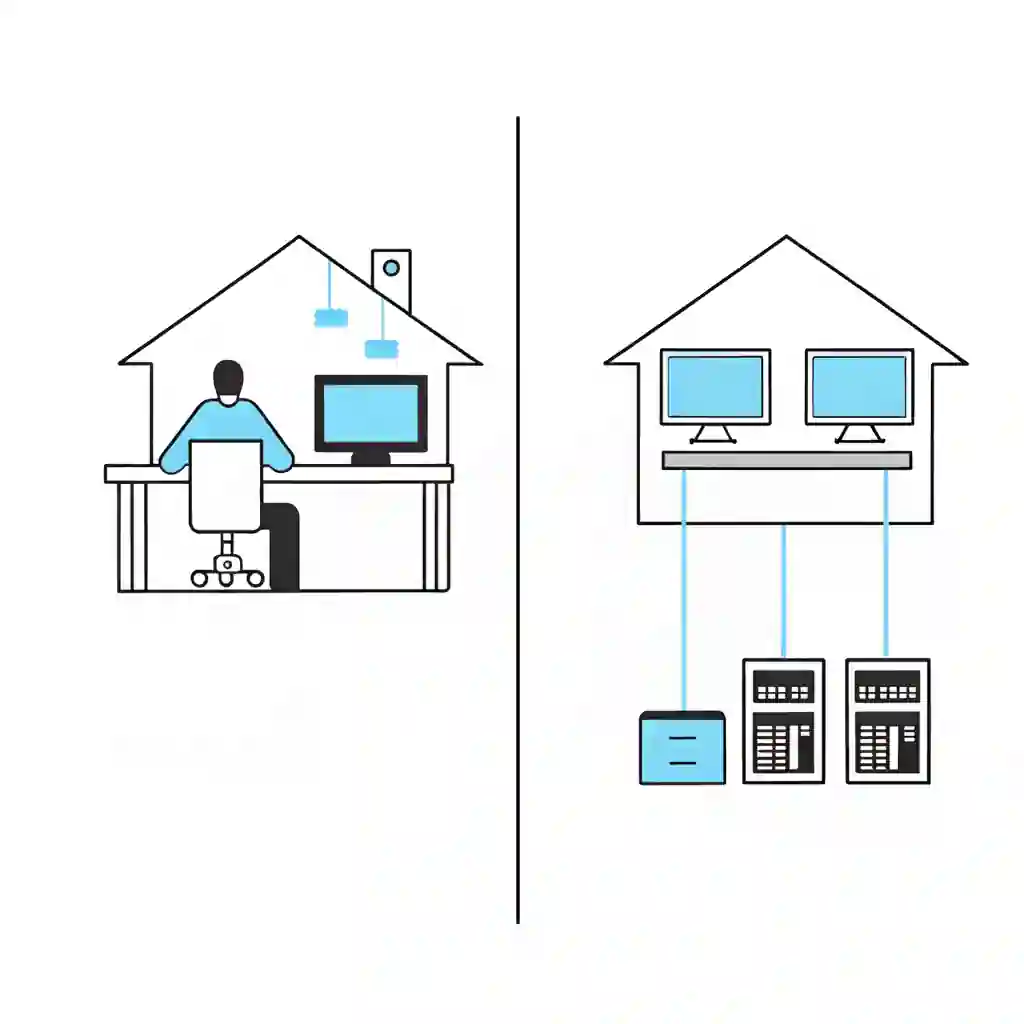
Table of Contents
- Written by IT Support Team
Introduction
As organisations grow, technology becomes more complex and more critical to daily operations. Systems support communication, finance, collaboration and compliance. At some point, leadership must decide whether to build an internal IT function or partner with an external managed provider. This decision is not purely financial. It affects governance maturity, risk exposure and long-term operational stability.
Understanding the Two Models
An in-house IT model involves employing internal staff responsible for maintaining infrastructure, supporting users and managing security. This provides direct control and immediate accessibility, particularly for organisations that prefer internal oversight.
Managed IT services, by contrast, involve partnering with an external provider under a contractual agreement. The provider typically delivers proactive monitoring, preventative maintenance and structured reporting. Responsibility is formalised through service level agreements and governance frameworks.
For businesses still assessing how to choose IT support provider options effectively, understanding the broader evaluation process is essential.
The right model depends on organisational scale, regulatory demands and growth trajectory.
Cost Comparison: Short-Term vs Long-Term
Cost is often the starting point in the managed IT services vs in-house IT discussion. However, headline salary comparisons rarely reflect the full financial picture. For a deeper breakdown of pricing, contract factors and budget planning, our managed IT services cost UK guide explains what businesses should consider before comparing internal headcount with outsourced support.
In-house IT includes salaries, employer contributions, recruitment costs, training investment and tool licensing. Additionally, businesses must account for absence cover, skill gaps and succession planning. Specialist expertise, particularly in cybersecurity or infrastructure architecture, may require multiple hires.
Managed services operate on predictable monthly contracts. While fees may appear higher initially, they typically include access to broader skill sets, monitoring platforms and structured reporting frameworks.
Long-term financial stability depends not only on payroll comparisons but also on risk mitigation and incident reduction. Unexpected outages, security incidents or skill shortages often create indirect costs that exceed salary savings.
Scalability and Growth Considerations
Growth introduces complexity. New users, additional systems and expanding regulatory obligations increase operational demands.
An in-house model may struggle to scale quickly. Recruitment takes time, and hiring specialists for short-term projects can be inefficient. Internal teams may become overstretched as infrastructure expands.
Managed IT services are typically designed for scalability. Providers maintain multi-disciplinary teams capable of adjusting coverage as organisations grow. Infrastructure projects, migrations or security enhancements can be supported without permanent headcount increases.
When evaluating managed IT services vs in-house IT, scalability should be considered alongside cost. Rapid expansion without adequate governance can increase operational exposure.
Operational Risk Exposure
One of the most overlooked aspects of the managed IT services vs in-house IT decision is operational risk. Internal teams may provide familiarity and direct control, but limited redundancy can create vulnerability. If a key individual is unavailable, coverage gaps may emerge.
Managed providers often distribute knowledge across teams, reducing reliance on single individuals. Structured monitoring and preventative maintenance processes may reduce incident frequency over time.
If risk reduction is one of the main reasons for reviewing your support model, it is worth comparing each option against a risk-led IT support provider approach before making a final decision.
Selecting a support model should reduce exposure, not merely shift responsibility.
Knowledge Depth and Specialisation
Modern IT environments require diverse expertise. Cloud architecture, endpoint security, compliance oversight and network design all demand specialist knowledge.
An in-house team may excel in familiarity with internal systems but may lack breadth across emerging technologies. Training investment can mitigate this but requires time and budget.
Managed IT services providers typically maintain cross-functional teams. Exposure to multiple client environments often accelerates knowledge accumulation and process maturity.
When comparing managed IT services vs in-house IT, businesses should assess not only technical skills but also access to structured methodologies and governance experience.
Accountability and Governance
Governance maturity differs significantly between models.
In-house teams may operate with informal processes, particularly in smaller organisations. While this can create flexibility, it may also lead to inconsistent reporting and undocumented risk exposure.
Managed providers operate under contractual accountability. Performance metrics, reporting cycles and escalation procedures are typically formalised. This structure can improve transparency and leadership visibility.
Accountability does not depend solely on outsourcing, but contractual governance often encourages consistency.
Cultural and Strategic Alignment
Cultural alignment influences the success of either model.
In-house IT teams integrate directly into organisational culture. They may develop deep familiarity with internal workflows and stakeholder preferences.
Managed providers, however, often bring external perspective and process discipline. A strong provider relationship should feel collaborative rather than transactional.
Hybrid or co-managed models can combine internal familiarity with external expertise. The optimal structure depends on organisational maturity and leadership engagement.
Which Model Suits Your Organisation?
There is no universal answer to the managed IT services vs in-house IT question. Instead, suitability depends on factors including:
- Organisation size
- Regulatory complexity
- Growth trajectory
- Risk tolerance
- Budget flexibility
Smaller organisations may lack resources to build comprehensive internal teams. Larger enterprises may benefit from hybrid structures combining internal leadership with external specialist oversight.
The key is structured evaluation rather than assumption.
Long-Term Technology Strategy
Technology decisions must support long-term objectives. Whether expanding into new markets, adopting cloud platforms or navigating regulatory changes, IT models should enable rather than restrict growth.
Organisations seeking structured oversight without the complexity of maintaining full internal departments often review a wider Managed IT Services model to improve governance, support coverage and long-term technology planning.
Strategic alignment ensures that governance frameworks evolve alongside business objectives.
Conclusion
The managed IT services vs in-house IT decision is not purely operational. It shapes governance maturity, risk exposure and scalability potential.
Internal teams offer familiarity and control but may face resource limitations and skill gaps. Managed providers bring structured oversight, broader expertise and predictable governance frameworks.
Ultimately, organisations should evaluate both models through the lens of long-term stability, accountability and growth readiness. A structured approach ensures that whichever model is chosen, it supports operational resilience and strategic development.
FAQs
What is the main difference between managed IT services and in-house IT?
Managed IT services involve outsourcing IT oversight under contract, while in-house IT relies on internal staff.
Is managed IT cheaper than in-house IT?
It depends on organisational size and requirements. Managed services may offer predictable costs and broader expertise.
Which model reduces operational risk?
Structured governance and redundancy typically reduce risk, whether delivered internally or through a managed provider.
Can businesses combine both models?
Yes. Hybrid or co-managed approaches are common in growing organisations.
How should businesses decide?
By assessing scalability, governance maturity, compliance requirements and long-term growth objectives.

WRITTEN BY
IT Support Team
IT Industry Expert
June 2, 2026